



Edible jellyfish (Rhopilema) in Thailand
Rhopilema hispidum · Family: Rhizostomatidae · In Thai: แมงกะพรุนหนัง
Thailand’s main edible jellyfish. The sting is usually mild, but the oral arms do sting and some people get a long-lasting itchy rash. Similar root-mouth jellyfish (Catostylus, Acromitus) also usually sting mildly.
What it looks like
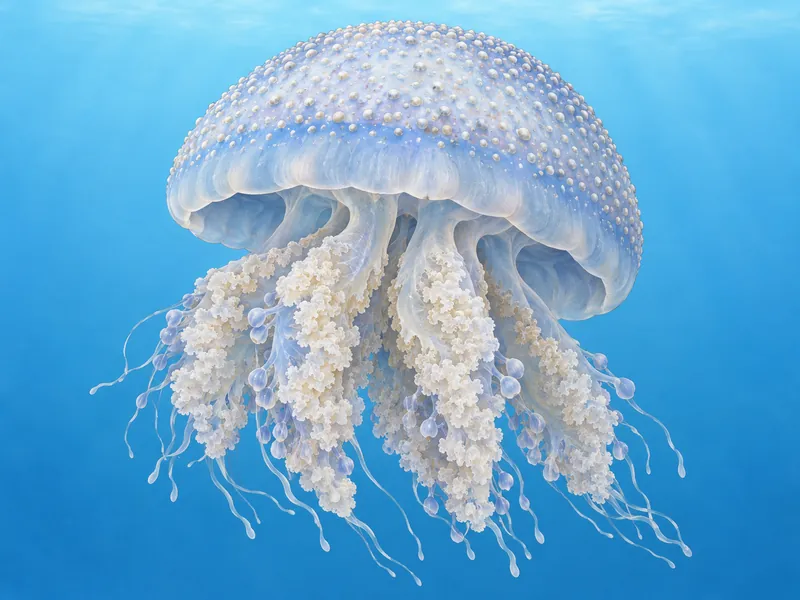
A large, firm hemispherical bell, milky, bluish or brownish, rough with small hard warts. Beneath are eight thick oral arms with frills and filaments; there are no tentacles around the rim.
Size: Bell usually 20–50 cm.
Where and when in Thailand
Found on both coasts; fished mainly in the Gulf of Thailand, where it sometimes arrives in large swarms.
Gulf of Thailand · Andaman Sea
The sting
Mild burning and redness; sometimes an itchy rash that lasts several days.
First aid
📞 Emergency medical services in Thailand: 1669
Rinse with seawater, do not rub, and use a cold pack for pain and itching. See a doctor if the rash is strong or does not fade.
Lookalikes
Lobonema — long pointed projections on the bell. Catostylus and Acromitus — smaller, often bluish or with a dark rim.
Did you know
- Its Thai name, maeng kaphrun nang, means “leather jellyfish”.
- Laboratory tests in Thailand found its oral arms less toxic than those of the edible Lobonemoides.
Also called: Edible jellyfish, Catostylus, Acromitus, Root-mouth jellyfish
Full first-aid guide →
Report jellyfish →
Sources
- MNRE knowledge hub — แมงกะพรุนกินได้ (edible jellyfish of Thailand)
- Kondo et al. (2020). Cnidomes and toxicities of the oral arms of two commercially harvested rhizostome jellyfish in Thailand. JMBA
- Kawahara et al. (2006). Stings of edible jellyfish (Rhopilema hispidum, R. esculentum, Nemopilema nomurai) in Japanese waters. Toxicon
- Osathanunkul et al. (2022). Distinguishing venomous jellyfish species via HRM analysis (Table 1: jellyfish of Thai waters, DMCR data). Front. Mar. Sci.
Other jellyfish of Thailand
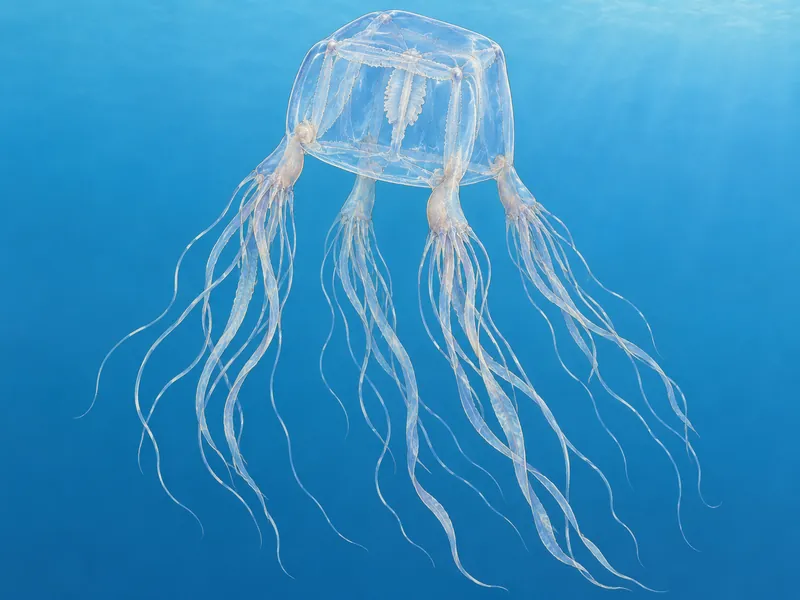 Thai box jellyfish (Chironex)
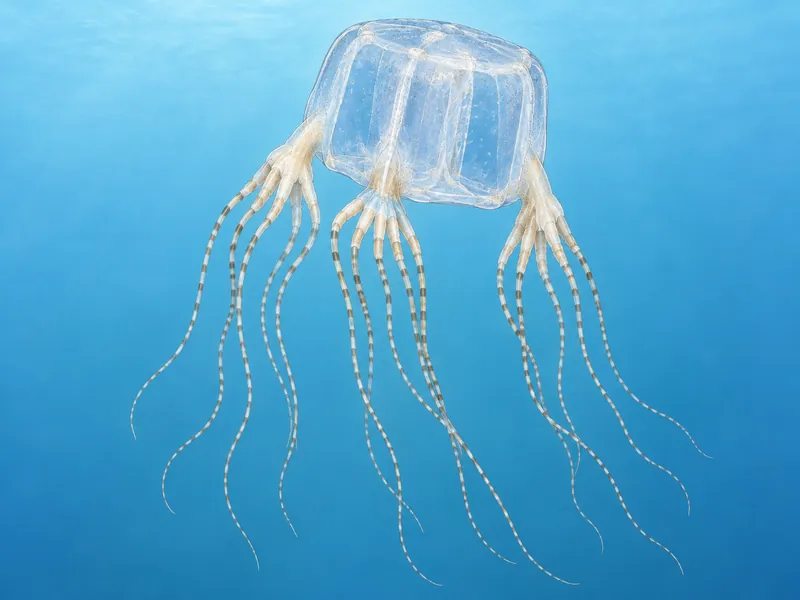 Chiropsoides box jellyfish
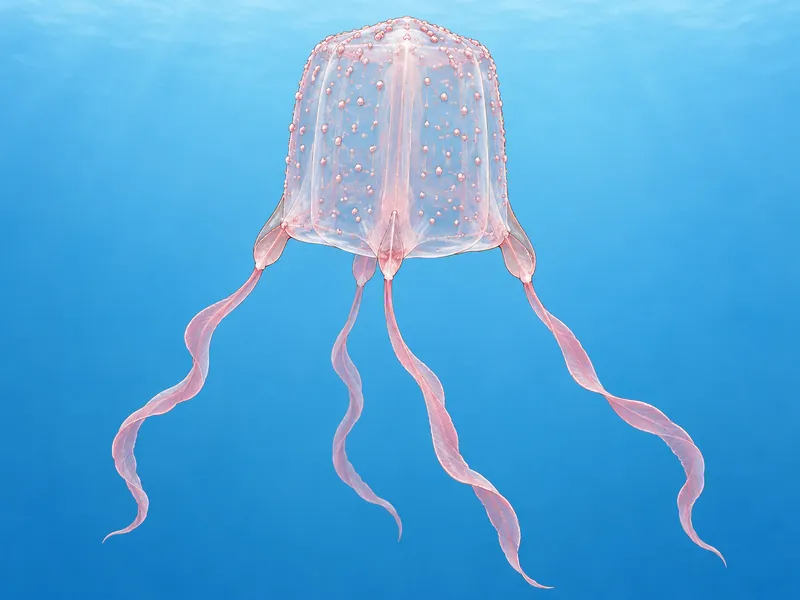 Morbakka (single-tentacle box jellyfish)
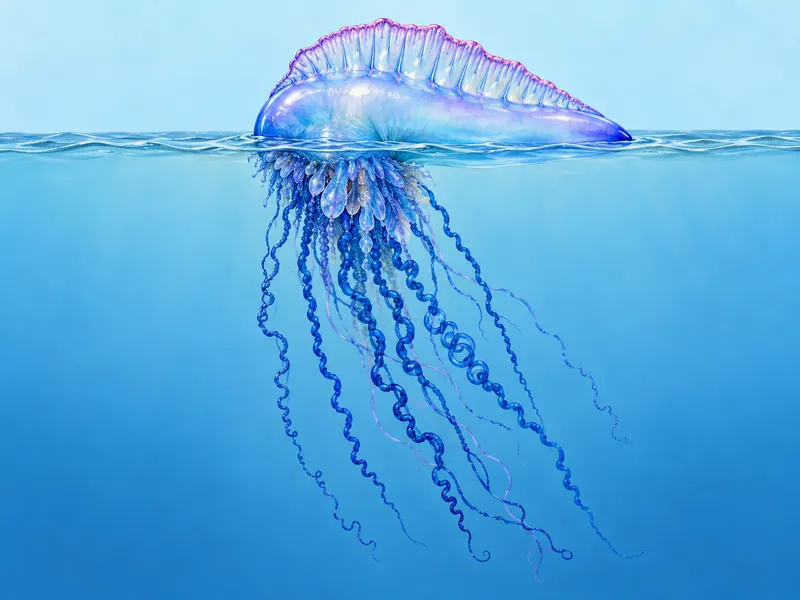 Portuguese man o’ war (bluebottle)
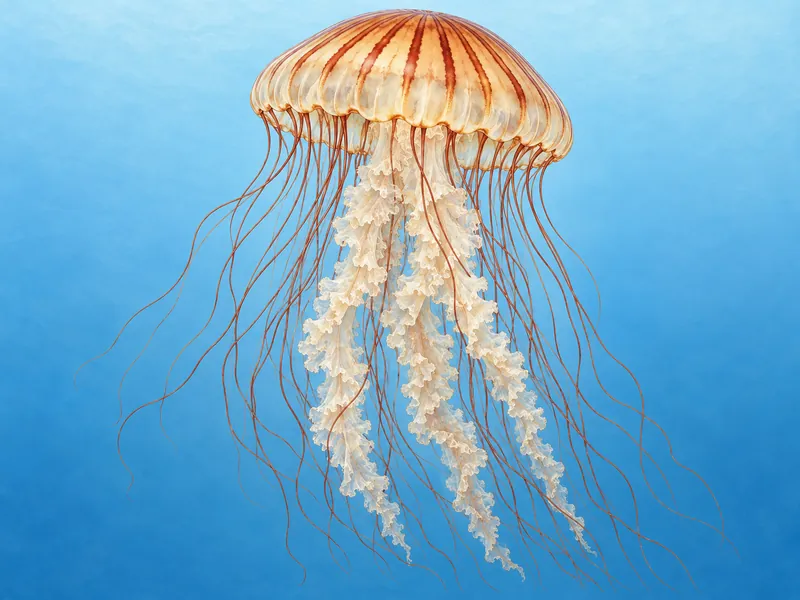 Sea nettle (fire jellyfish)
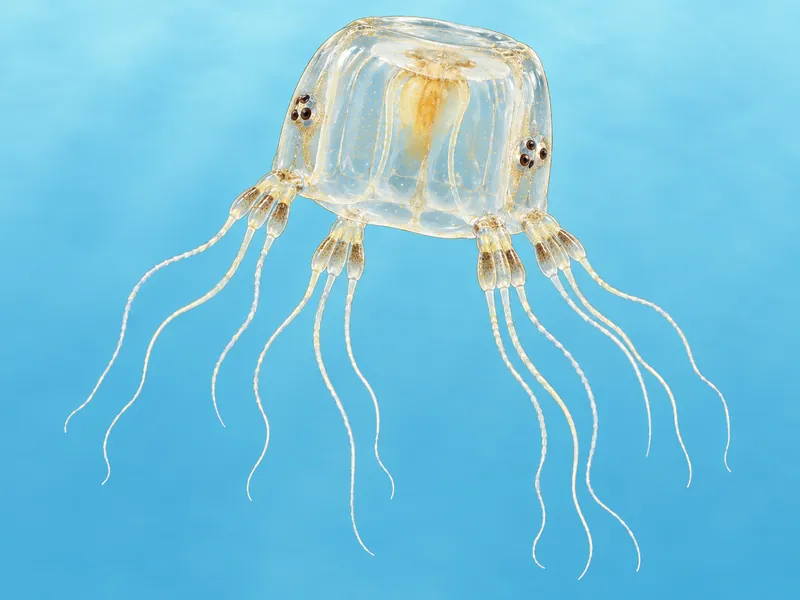 Mangrove box jellyfish (Tripedalia)
Questions and answers
Is the edible jellyfish (rhopilema) dangerous?
Moderate sting. Mild burning and redness; sometimes an itchy rash that lasts several days.
Where in Thailand does the edible jellyfish (rhopilema) occur?
Found on both coasts; fished mainly in the Gulf of Thailand, where it sometimes arrives in large swarms.
What to do if stung?
Rinse with seawater, do not rub, and use a cold pack for pain and itching. See a doctor if the rash is strong or does not fade.