



What a jellyfish sting looks like
A jellyfish sting shows as red welts, lines of dots or a rash where tentacles touched the skin, with burning pain and itch. Long whip-like welts with a ladder pattern point to a box jellyfish, a chain of small red beads to a bluebottle. With severe pain, a stung child or difficulty breathing, call 1669.
The mark on the skin often tells you which jellyfish it was — and that changes the first aid. If you are not sure, treat it as a box jellyfish sting, the most dangerous kind in Thailand.
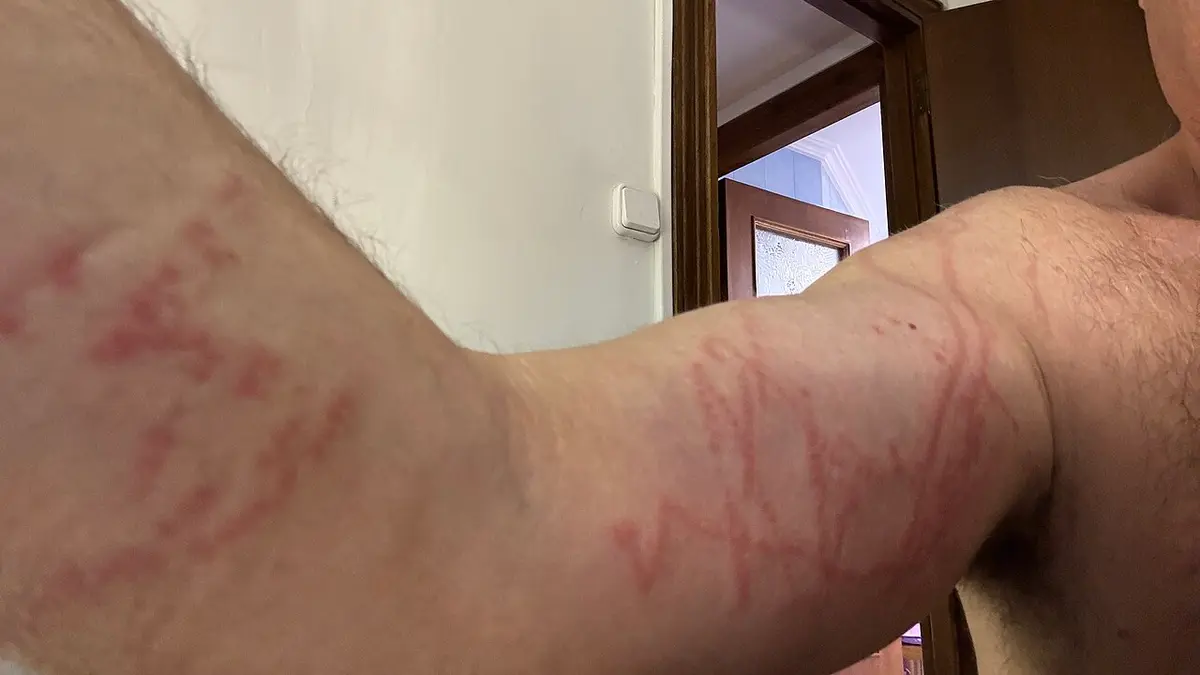
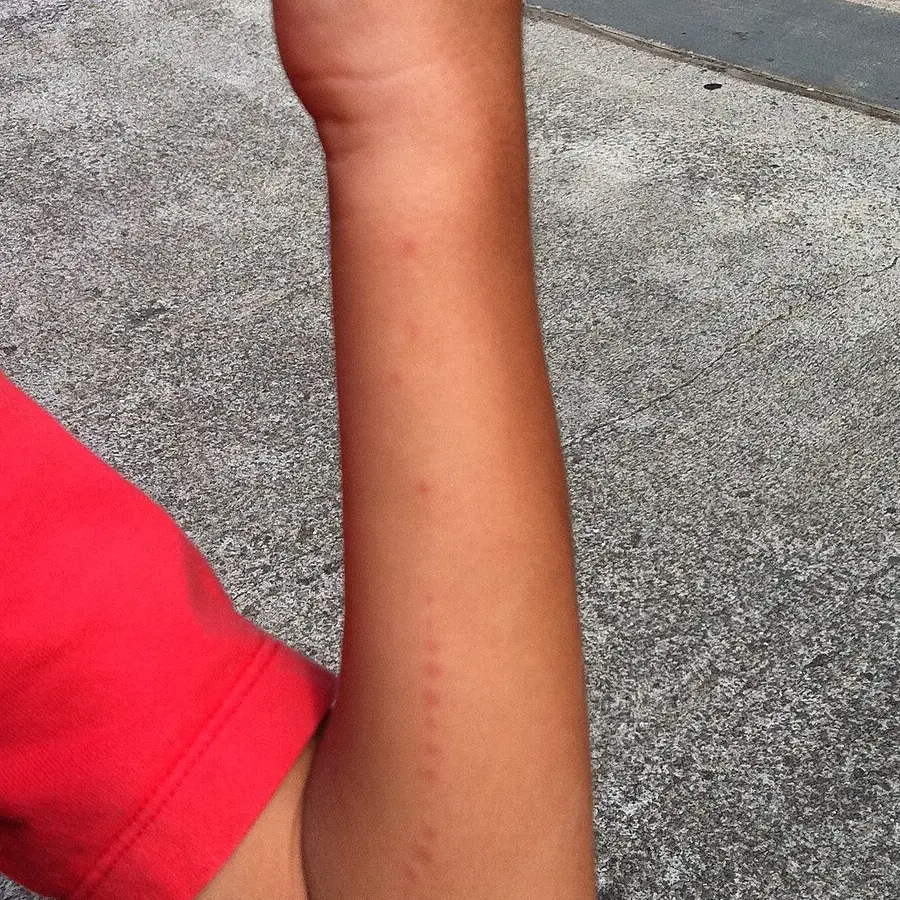
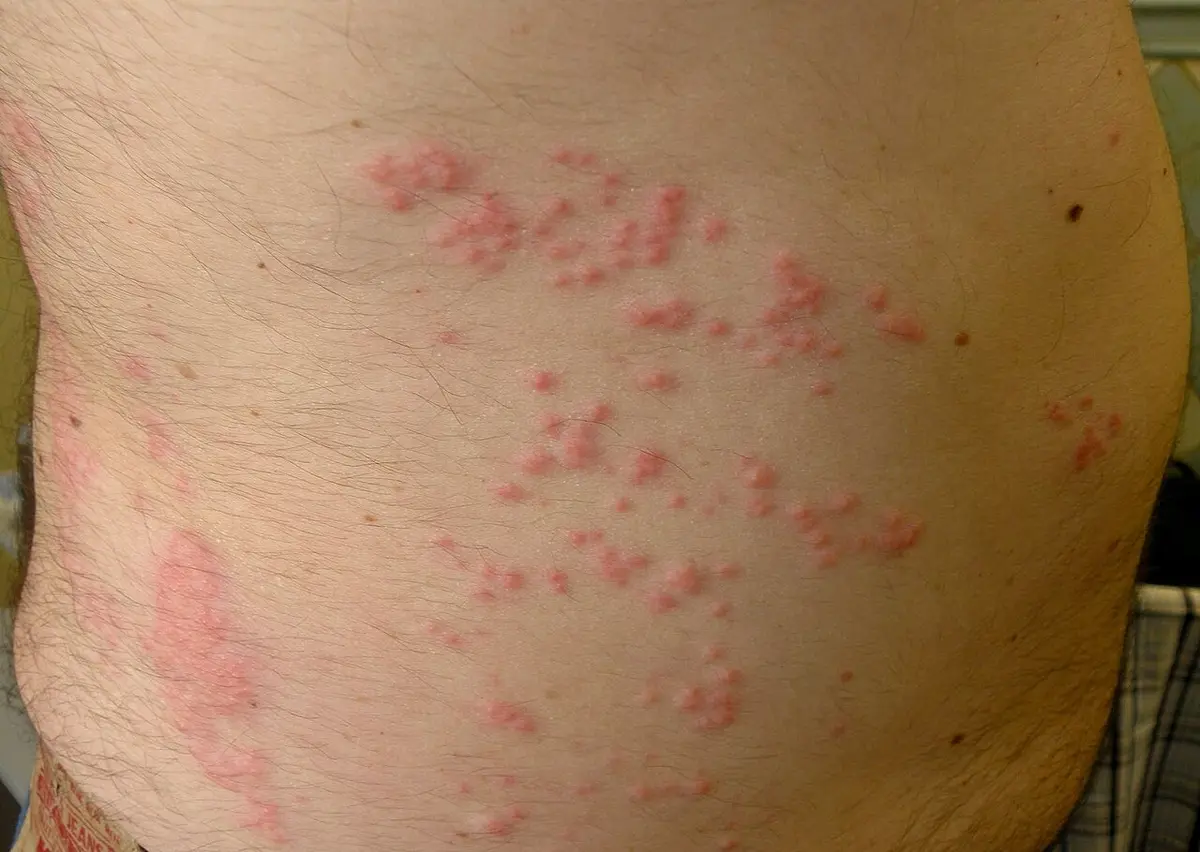
Sting marks by type
Box jellyfish: long red or purple welts that look like whip lashes and often cross each other. They may show a ladder-like pattern across the lines. The pain is severe and immediate, and blisters can form within hours.
Bluebottle (Portuguese man o’ war): thin lines of small red or whitish beads and blotches, like a string of pearls. The track is usually shorter and finer than a box jellyfish’s, and the burning pain is milder.
Mild species: redness, small red spots or an itchy, hive-like rash. It often fades within a few hours.
How it feels and how long it lasts
Expect a sharp, burning pain at first, followed by itching. Mild stings fade within hours, bluebottle marks usually within a day or two, and box jellyfish welts can last for days or longer.
Delayed reactions happen: itching and a rash can flare up at the same spot one to two weeks later. After a severe sting, dark or pale marks may stay for weeks or months, and scarring is possible.
Call 1669 or go to hospital if
There is difficulty breathing, chest pain, weakness, confusion or collapse.
A large area is stung (for example, more than half an arm or leg), or the face, eyes or genitals; or the person stung is a child.
Severe back or belly pain, heavy sweating, vomiting, anxiety or a racing heart start 20–60 minutes after the sting. This is Irukandji syndrome from small box jellyfish, and the skin mark can be barely visible.
There are signs of allergy: hives all over the body, swelling of the lips or face, wheezing. If the person stops breathing, start CPR.
What to do right away
Get out of the water and call for help. For a box jellyfish or an unknown sting, pour vinegar over the skin for at least 30 seconds, then gently lift off any tentacles with tweezers or a gloved hand.
If it is definitely a bluebottle, skip the vinegar: rinse with seawater, remove the tentacles and soak the area in hot water at about 45 °C for 20–30 minutes (hot but not scalding). No hot water? Use a cold pack wrapped in cloth.
Do not rub the skin or scrub it with sand, and do not use fresh water, alcohol or urine. Do not apply a pressure bandage or tourniquet.
Skin care afterwards
Once first aid is done, a cold pack wrapped in cloth eases pain and itching. Antihistamine tablets and hydrocortisone cream can help — ask a pharmacist or doctor; both are sold in Thai pharmacies.
Do not scratch or pop blisters, and keep the marks out of the sun. See a doctor if after 2–3 days the redness spreads, the area feels hot, there is pus or a fever — these are signs of infection.
Sting or allergic reaction?
A normal sting stays where the tentacles touched. An allergic reaction spreads beyond it: hives over the body, swelling of the face, lips or tongue, wheezing, dizziness. This is anaphylaxis — call 1669 at once. If the person carries an adrenaline auto-injector, it should be used.