



Jellyfish sting first aid
After a jellyfish sting, get out of the water and do not rub the skin. If the jellyfish is unknown or looks like a box jellyfish, pour household vinegar over the sting for at least 30 seconds; for a bluebottle sting rinse with seawater instead, then lift off tentacles with tweezers. Fresh water, alcohol and urine do not help. With difficulty breathing, chest pain or fainting, call 1669 straight away.
📞 1669 — Emergency medical services in Thailand: 1669. Tourist police: 1155.
First aid step by step (illustrations)
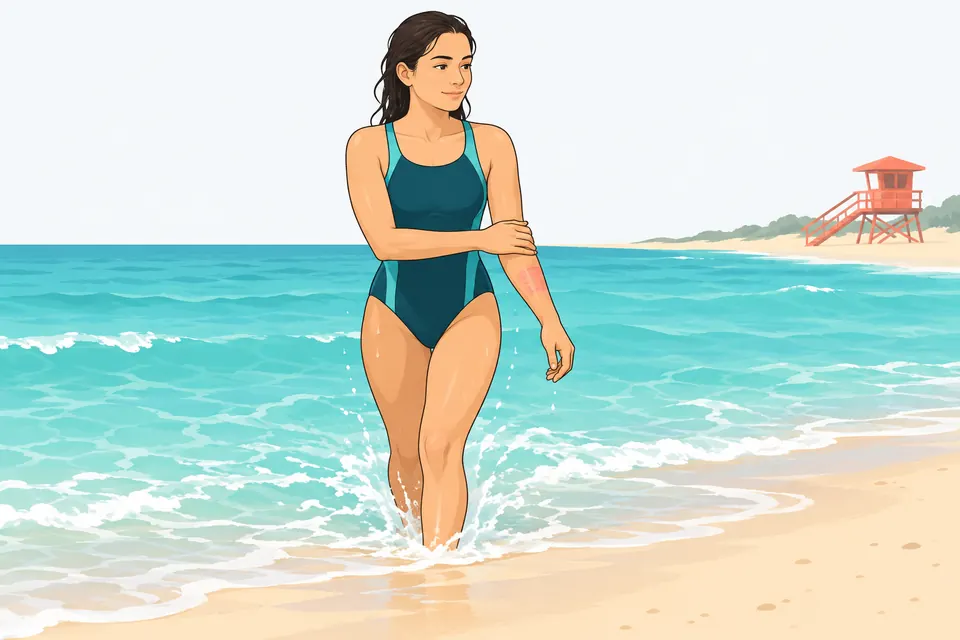
1. Get out of the water calmly. Do not rub the skin or rinse it with fresh water. 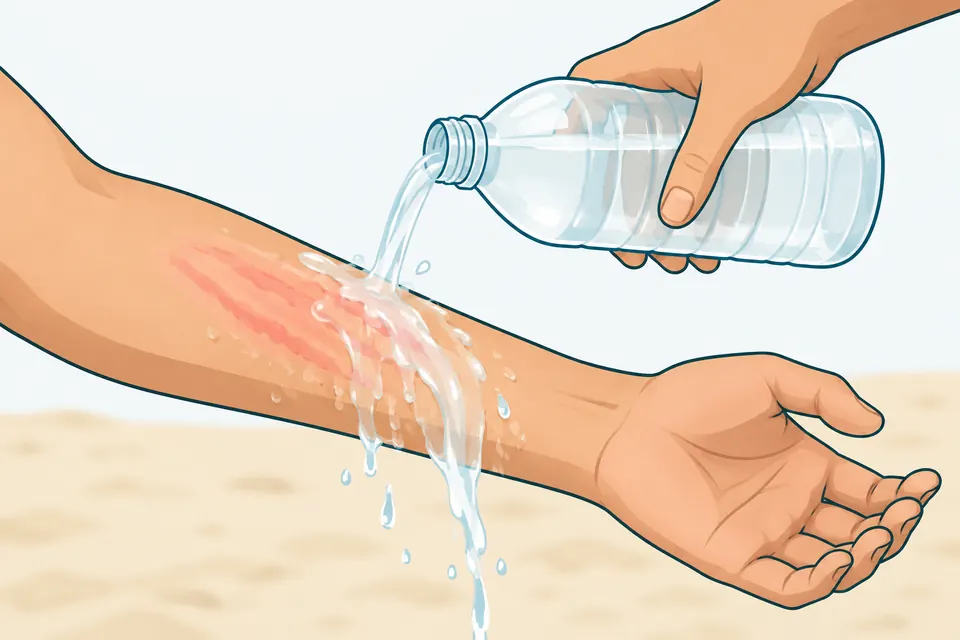
2. Box jellyfish or unknown: pour vinegar over the sting for at least 30 seconds. After a bluebottle, rinse with seawater instead. 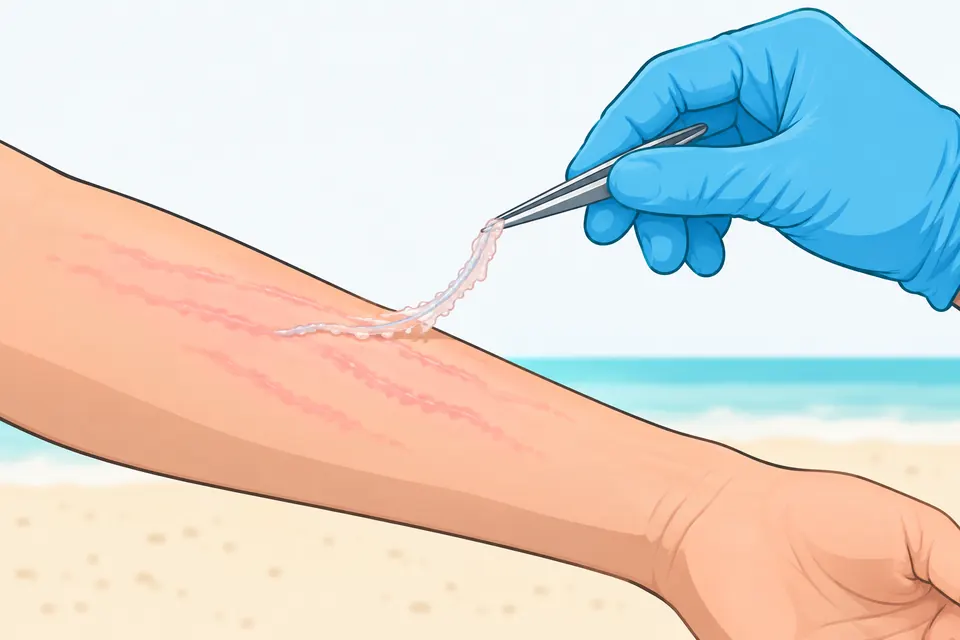
3. Lift off remaining tentacles with tweezers or a gloved hand. 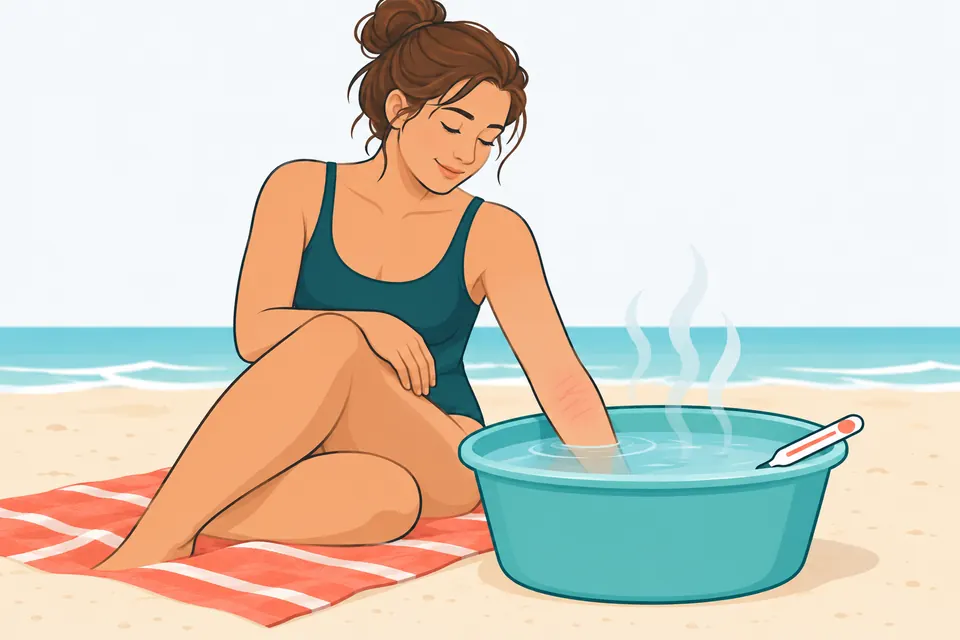
4. For bluebottle pain: hot water as hot as you can tolerate (about 45 °C) for 20–30 minutes. For other stings: a cold pack through cloth.
Right away
- Get out of the water and call for help from a lifeguard or people nearby.
- If the person is not breathing or unresponsive, call 1669 and start CPR.
- Do not rub or scratch the sting and do not rinse it with fresh water: both release more venom.
Box jellyfish or unknown type
- Pour plenty of household vinegar over the sting for at least 30 seconds. Many Thai beaches have vinegar stations.
- After the vinegar, lift off any remaining tentacles with tweezers or a gloved hand.
- Watch breathing and how the person feels. After a box jellyfish sting, see a doctor even if it seems better.
Bluebottle (Portuguese man o’ war)
- A blue gas-filled float with long blue tentacles, often washed up on the sand. Do not touch it: it still stings on the beach.
- Rinse tentacles off with seawater and pick off what is left with tweezers.
- Hot water (as hot as is comfortable, about 45 °C) for 20–30 minutes eases the pain; if none, use a cold pack wrapped in cloth.
- If you are not sure it was a bluebottle, treat it as a box jellyfish sting and use vinegar.
Do not
- Do not use fresh water, alcohol, urine or sand, and do not rub with a towel.
- Do not apply a pressure bandage or a tourniquet.
- Do not put ice directly on the skin.
Go to hospital if
- There is difficulty breathing, chest pain, confusion or fainting.
- A box jellyfish is suspected or the sting covers a large area (for example more than half an arm or leg).
- The face, eyes or genitals are stung, or the person is a child or elderly.
- Severe back or belly pain, cramps, sweating, vomiting or anxiety appear 20–60 minutes later.
- There is swelling, a rash spreading over the body or other signs of allergy; later, redness or pus at the sting.
This is a short guide, not a substitute for medical care. If in doubt, call 1669.
Questions and answers
What should I do if a jellyfish stings me in Thailand?
Get out of the water. Call 1669 for trouble breathing, chest pain or collapse. Do not rub the sting and do not rinse it with fresh water. If a box jellyfish is possible, pour vinegar over the sting for at least 30 seconds.
Should I use vinegar on a jellyfish sting?
Vinegar is for box jellyfish stings or when the species is unknown: plenty of it, for at least 30 seconds. For bluebottles rinse with seawater and remove tentacles; hot water around 45 °C eases pain. No fresh water, alcohol or urine.
When should I go to hospital after a jellyfish sting?
With breathing difficulty, chest pain, fainting, a large sting area or one on the face or eyes, in children, when a box jellyfish is suspected, or if severe back or belly pain, cramps or vomiting appear 20–60 minutes later.
What is the emergency number in Thailand?
1669 for emergency medical services, 1155 for the tourist police, 191 for the police.