



Morbakka (single-tentacle box jellyfish) in Thailand
Morbakka spp. · Family: Carukiidae · In Thai: แมงกะพรุนกล่องหนวดเส้นเดียว
A box jellyfish with one tentacle in each corner. Its sting can cause an Irukandji-like syndrome — a severe whole-body reaction that develops 5–40 minutes after the sting. Victims can panic and drown, so get out of the water straight away.
What it looks like
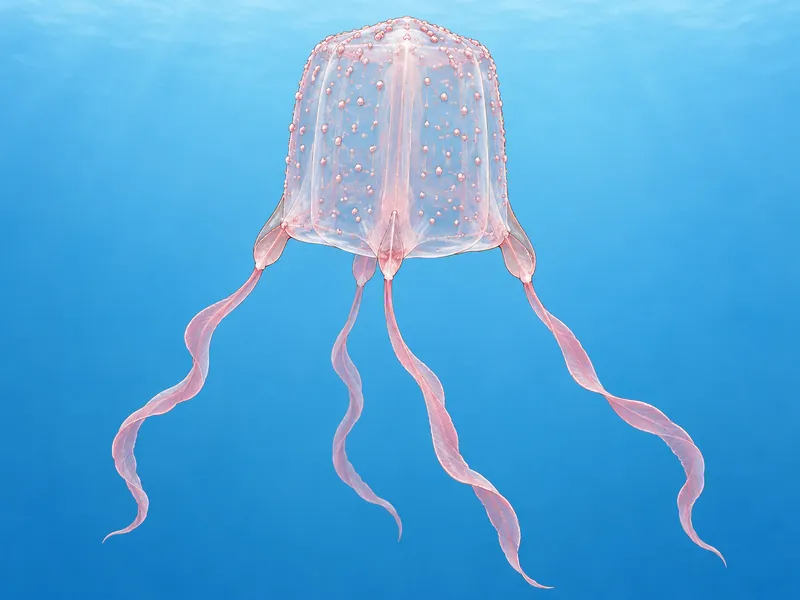
A clear cube-shaped bell, usually taller than wide, dotted with small pinkish stinging warts. Each of the four corners has a flat blade carrying one long, flat, pinkish-mauve tentacle.
Size: Bell a few centimetres; tentacles can reach about half a metre.
Where and when in Thailand
Recorded along almost all coastal provinces, year-round in the central and lower Gulf of Thailand and on the Andaman coast. Usually lives in deeper water, but stings near the shore happen regularly.
Gulf of Thailand · Andaman Sea · Most often: all year
The sting
Immediate sharp, burning pain like an electric shock; skin marks can look like tank-track prints. Later there may be back and muscle pain, a racing heart, high blood pressure, nausea, sweating, breathlessness and sometimes collapse.
First aid
📞 Emergency medical services in Thailand: 1669
Leave the water, pour vinegar over the sting for at least 30 seconds, remove tentacles, do not rub and do not use fresh water. Call 1669 or go to hospital urgently even if you feel better at first, because dangerous symptoms are delayed. Cold can ease local pain.
Lookalikes
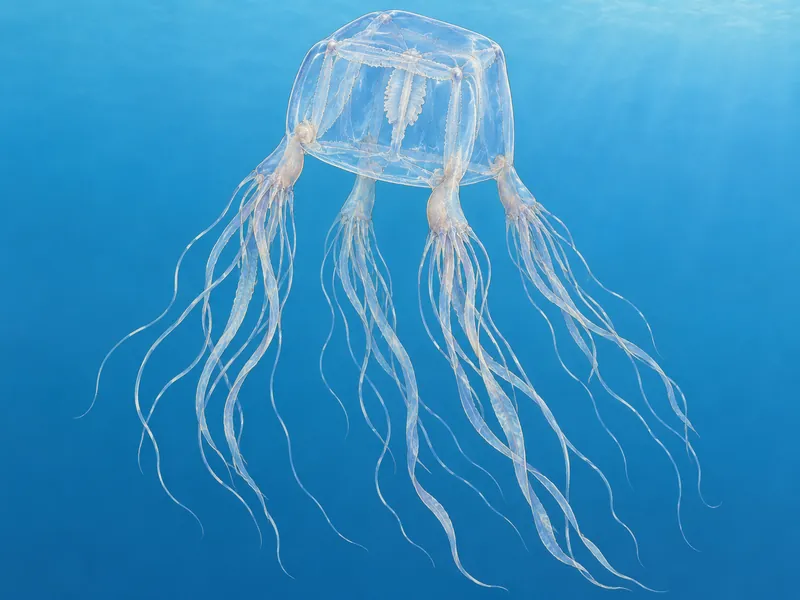
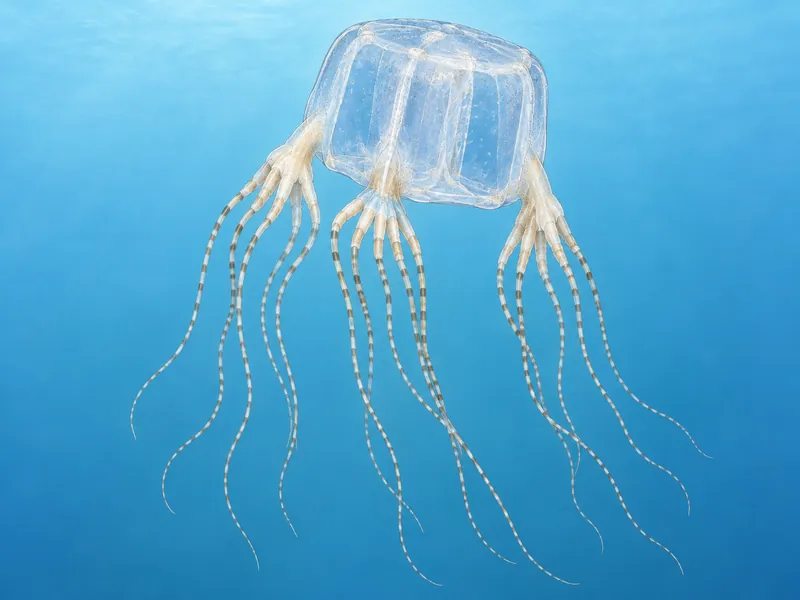
Gershwinia thailandensis — another single-tentacle member of the same family from the Gulf of Thailand. Chironex and Chiropsoides have bundles of tentacles at each corner.
Did you know
- At least three still-unnamed Morbakka species are known from Thai waters.
- Between 2007 and 2019, 19 cases of Irukandji-like syndrome were documented in Thailand; where the jellyfish could be identified, it was Morbakka.
- Every patient in that study had high blood pressure.
Also called: Irukandji-type box jellyfish, Fire jelly, Carukiid box jellyfish
Full first-aid guide →
Report jellyfish →
Sources
- Thaikruea (2020). Irukandji-like syndrome caused by single-tentacle box jellyfish in Thailand, 2007–2019. Int Marit Health
- DMCR — สถานภาพแมงกะพรุนพิษ ปี พ.ศ. 2566 (toxic jellyfish status, 2023)
- Yasanga et al. (2024). Nematocysts of Gershwinia thailandensis and Morbakka sp. from the Gulf of Thailand. Biology 13:845
- Premmaneesakul & Sithisarankul (2019). Toxic jellyfish in Thailand. Int Marit Health 70(1):22–26
- ANZCOR Guideline 9.4.5 — First Aid Management of Marine Envenomation
Other jellyfish of Thailand
 Thai box jellyfish (Chironex)
 Chiropsoides box jellyfish
 Portuguese man o’ war (bluebottle)
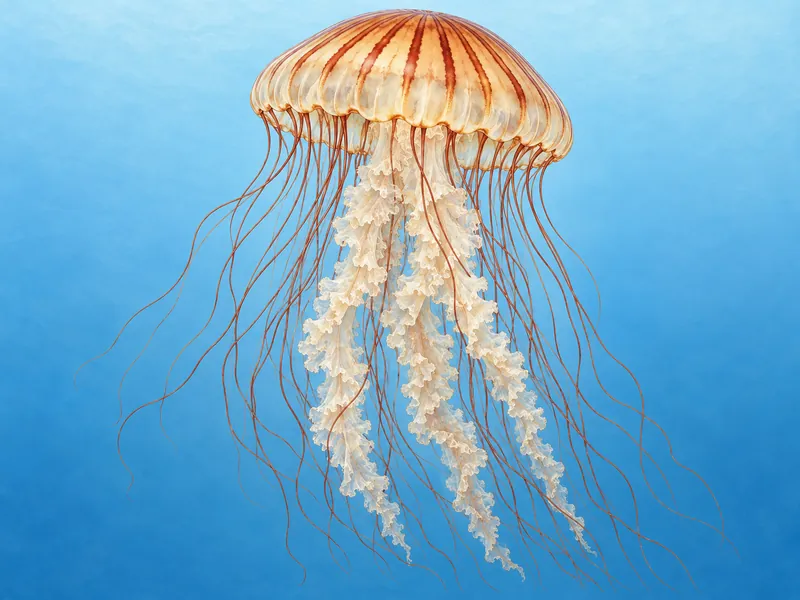 Sea nettle (fire jellyfish)
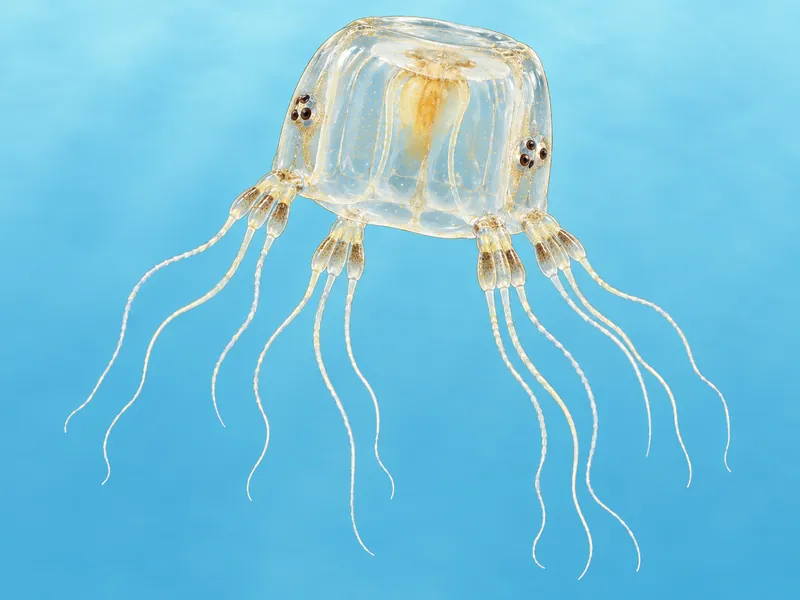 Mangrove box jellyfish (Tripedalia)
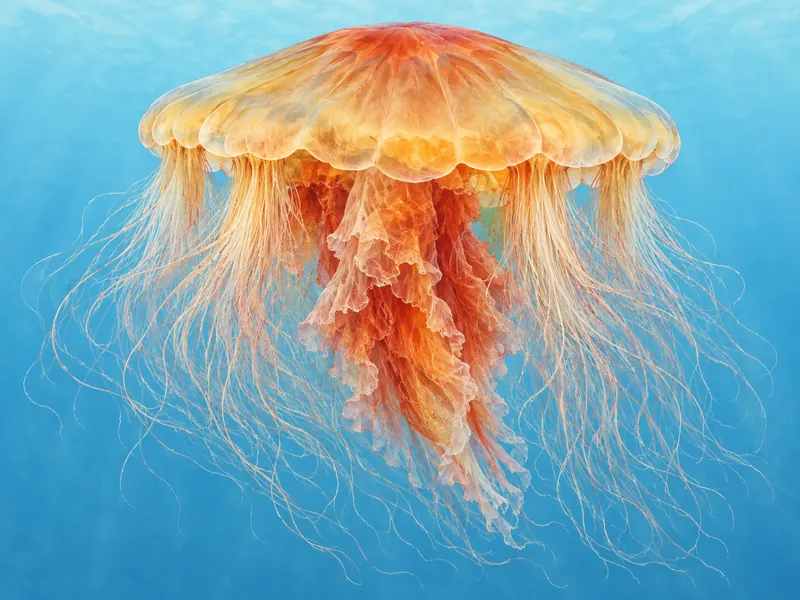 Lion’s mane jellyfish
Questions and answers
Is the morbakka (single-tentacle box jellyfish) dangerous?
Severe sting. Immediate sharp, burning pain like an electric shock; skin marks can look like tank-track prints. Later there may be back and muscle pain, a racing heart, high blood pressure, nausea, sweating, breathlessness and sometimes collapse.
Where in Thailand does the morbakka (single-tentacle box jellyfish) occur?
Recorded along almost all coastal provinces, year-round in the central and lower Gulf of Thailand and on the Andaman coast. Usually lives in deeper water, but stings near the shore happen regularly.
What to do if stung?
Leave the water, pour vinegar over the sting for at least 30 seconds, remove tentacles, do not rub and do not use fresh water. Call 1669 or go to hospital urgently even if you feel better at first, because dangerous symptoms are delayed. Cold can ease local pain.