



Portuguese man o’ war (bluebottle) in Thailand
Physalia sp. · Family: Physaliidae · In Thai: แมงกะพรุนหัวขวด
Not a true jellyfish but a colony of organisms under a gas float, drifting on the surface and blown ashore by wind. The sting is very painful and can sometimes cause a whole-body reaction. Tentacles of stranded bluebottles still sting.
What it looks like
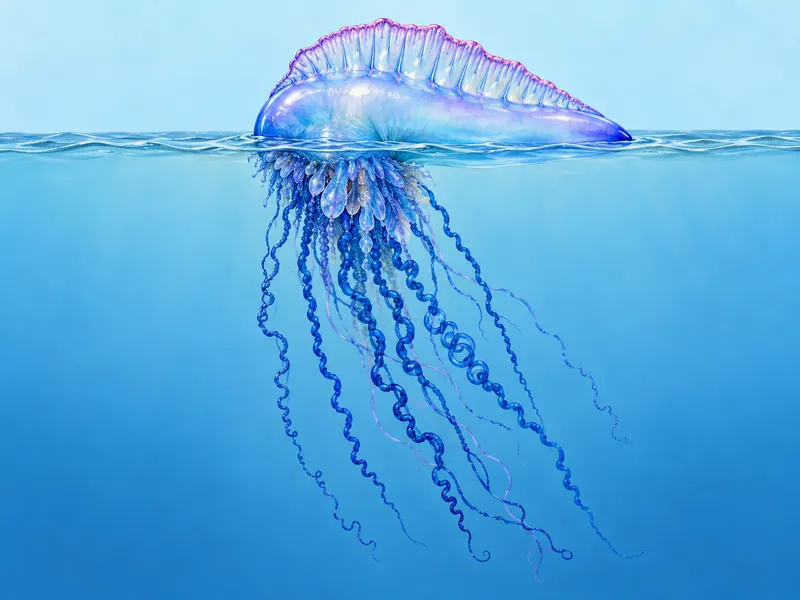
A translucent blue-violet “bottle” float with a low crest on top. Beneath it hang clusters of blue polyps and long bright-blue tentacles that can coil into spirals.
Size: Float usually 3–15 cm; tentacles can trail for several metres.
Where and when in Thailand
On the Gulf of Thailand side mostly from January to April; on the Andaman coast (Phuket, Krabi, Koh Lanta) from June to November, during the southwest monsoon. Washes up on beaches after strong onshore winds.
Andaman Sea · Gulf of Thailand · Most often: January, February, March, April, June, July, August, September, October, November
The sting
Sharp, burning pain with red lines or chains of spots on the skin. Sometimes chest tightness, breathing difficulty or nausea; reactions can be stronger in children and people with allergies.
First aid
📞 Emergency medical services in Thailand: 1669
Leave the water, remove the tentacles (with tweezers, a towel or fingers) and rinse well with seawater; do not rub. For pain, use hot water around 45 °C (as hot as comfortable, never scalding) for 20–30 minutes, or a cold pack if hot water is not available. Australian guidelines advise against vinegar for bluebottle stings, while Thai services use it; if you are not sure it was a bluebottle, treat it as a box jellyfish sting with vinegar. Call 1669 for breathing difficulty, chest pain or a large sting.
Lookalikes
Blue buttons and by-the-wind sailors are also blue and float on the surface, but they are flat discs, not inflated floats, with short tentacles. Plastic bags and balloons are sometimes mistaken for bluebottles too.
Did you know
- A bluebottle is a siphonophore: a colony of specialised individuals — some catch prey, some digest it, others reproduce.
- It cannot swim; its crest works as a sail.
- Stinging cells stay active in dead and dried-out bluebottles on the beach, so do not touch them and watch children.
Also called: Bluebottle, Man o’ war, Physalia
Full first-aid guide →
Report jellyfish →
Sources
- DMCR — สถานภาพแมงกะพรุนพิษ ปี พ.ศ. 2566 (toxic jellyfish status, 2023)
- Thai PBS (2024) — bluebottles stung 3 people off Racha Yai, Phuket
- Premmaneesakul & Sithisarankul (2019). Toxic jellyfish in Thailand. Int Marit Health 70(1):22–26
- ANZCOR Guideline 9.4.5 — First Aid Management of Marine Envenomation
- Phuket Aquarium — น้ำส้มสายชู กับการปฐมพยาบาลเมื่อสัมผัสแมงกะพรุนพิษ (vinegar and bluebottle first aid in Thailand)
Other jellyfish of Thailand
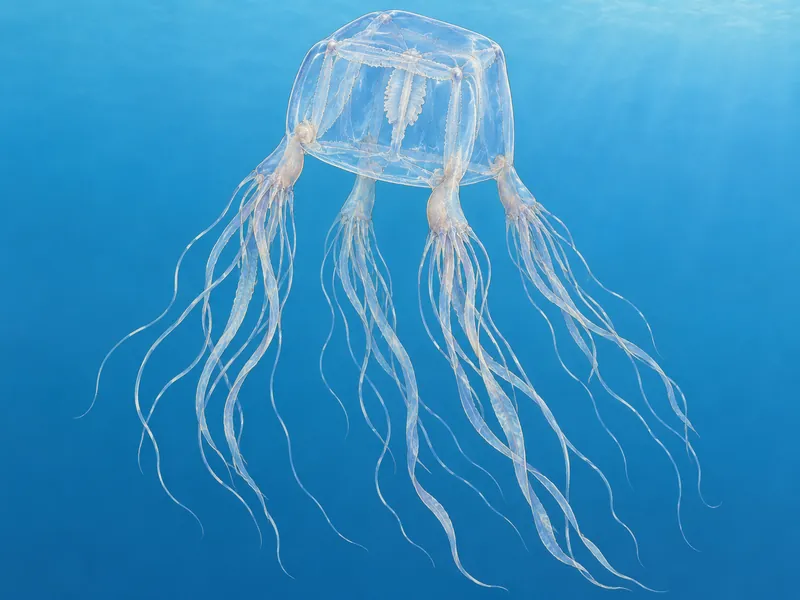 Thai box jellyfish (Chironex)
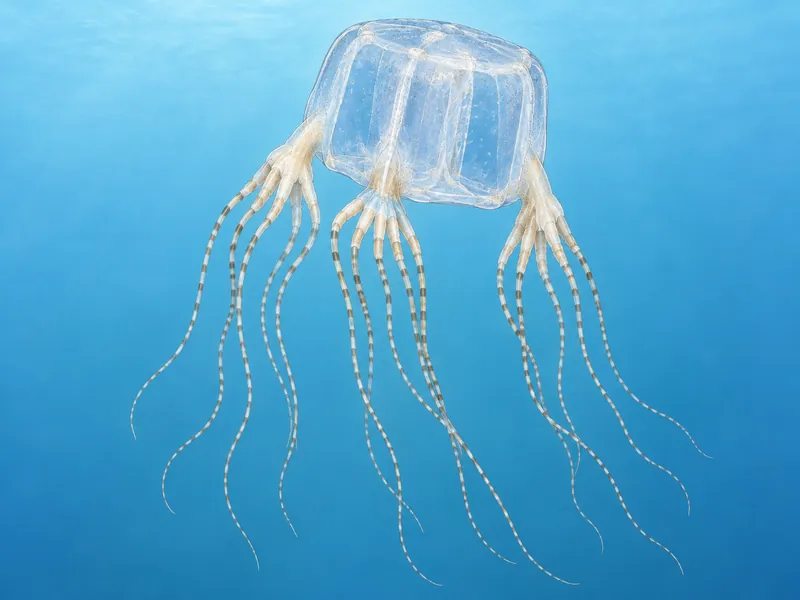 Chiropsoides box jellyfish
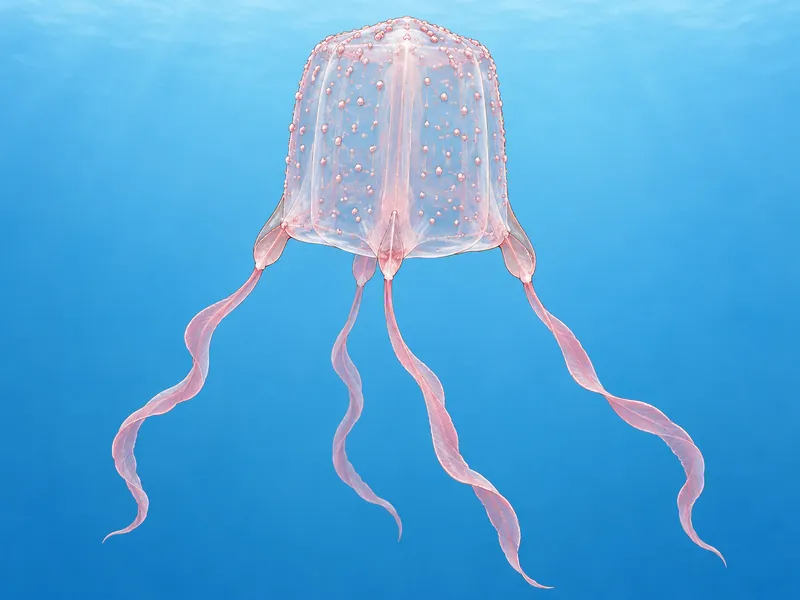 Morbakka (single-tentacle box jellyfish)
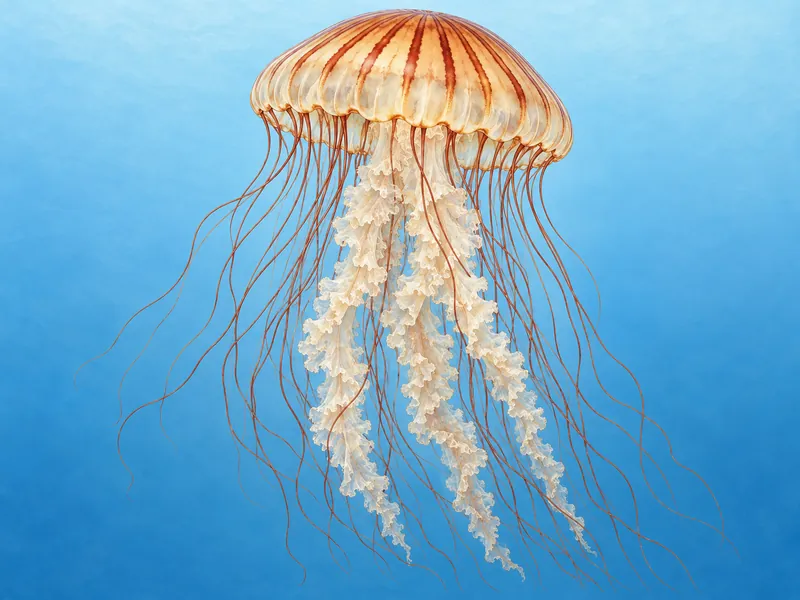 Sea nettle (fire jellyfish)
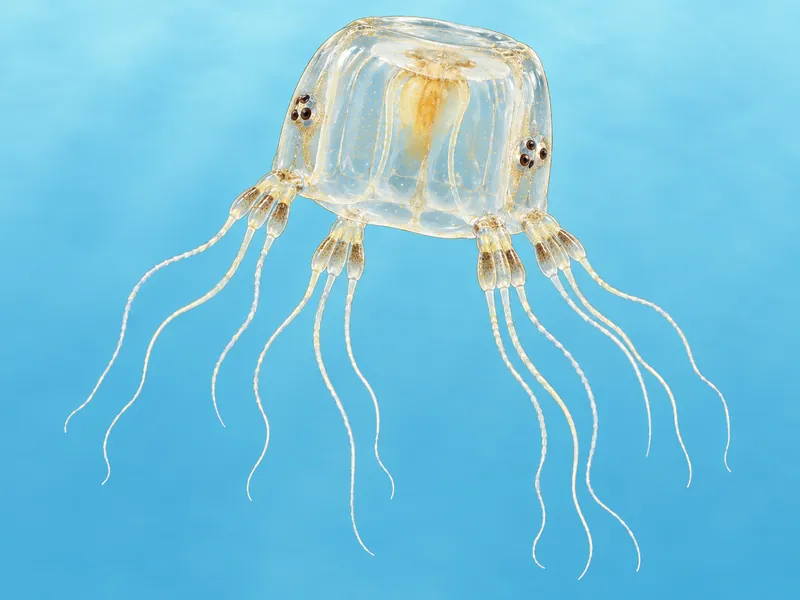 Mangrove box jellyfish (Tripedalia)
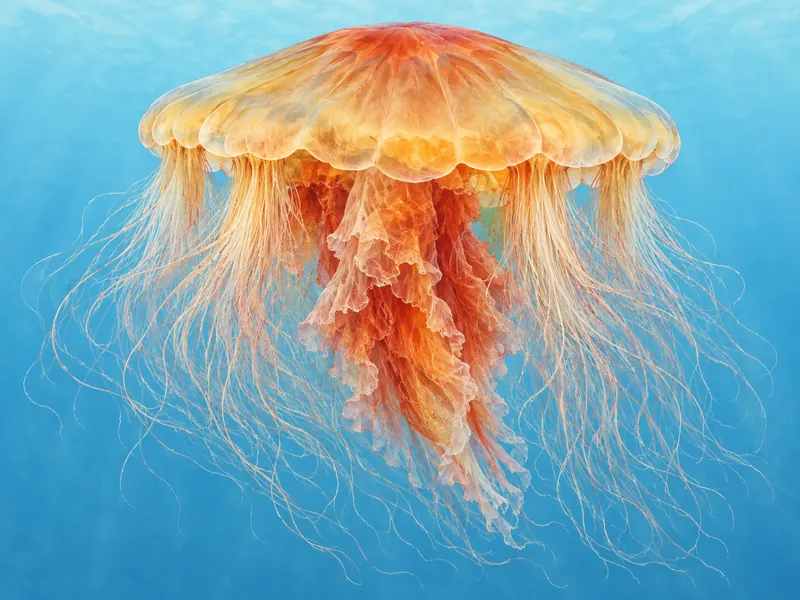 Lion’s mane jellyfish
Questions and answers
Is the portuguese man o’ war (bluebottle) dangerous?
Severe sting. Sharp, burning pain with red lines or chains of spots on the skin. Sometimes chest tightness, breathing difficulty or nausea; reactions can be stronger in children and people with allergies.
Where in Thailand does the portuguese man o’ war (bluebottle) occur?
On the Gulf of Thailand side mostly from January to April; on the Andaman coast (Phuket, Krabi, Koh Lanta) from June to November, during the southwest monsoon. Washes up on beaches after strong onshore winds.
What to do if stung?
Leave the water, remove the tentacles (with tweezers, a towel or fingers) and rinse well with seawater; do not rub. For pain, use hot water around 45 °C (as hot as comfortable, never scalding) for 20–30 minutes, or a cold pack if hot water is not available. Australian guidelines advise against vinegar for bluebottle stings, while Thai services use it; if you are not sure it was a bluebottle, treat it as a box jellyfish sting with vinegar. Call 1669 for breathing difficulty, chest pain or a large sting.
Is a bluebottle dangerous even when it is dead on the sand?
Stinging cells stay active in dead and dried-out bluebottles on the beach, so do not touch them and watch children.