



Hairy jellyfish (Lobonema) in Thailand
Lobonema smithii · Family: Lobonemidae · In Thai: แมงกะพรุนลอดช่อง
A large, firm jellyfish that is fished and eaten in Thailand. Alive, it stings: the projections on its bell and its oral arms carry stinging cells.
What it looks like
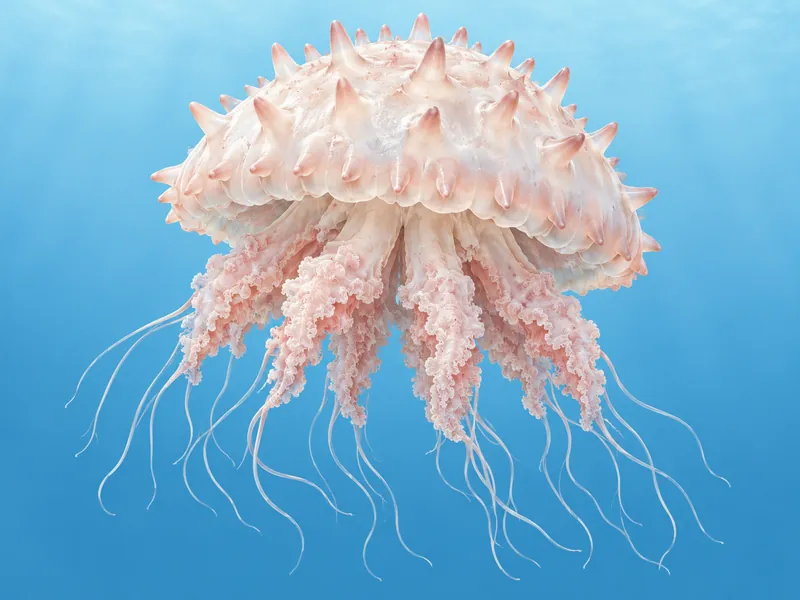
A thick milky-white to pale pink bell covered on top and around the edge with many pointed finger-like projections. Beneath are eight stout oral arms with long filaments; there are no fine tentacles around the rim.
Size: Bell usually 20–40 cm; projections a few centimetres long.
Where and when in Thailand
Found in coastal waters on both coasts; commercial catches come mainly from the Gulf of Thailand.
Gulf of Thailand · Andaman Sea
The sting
Burning, redness and an itchy rash where it touched. The related edible Lobonemoides proved more toxic than Rhopilema in laboratory tests.
First aid
📞 Emergency medical services in Thailand: 1669
Leave the water, rinse with seawater, remove any tissue without rubbing. For pain, use a cold pack or hot water around 45 °C.
Lookalikes
Rhopilema — also large and firm, but its bell is smooth or rough without long projections.
Did you know
- Its Thai name, maeng kaphrun lot chong, compares it to a dessert made of rice-flour “noodles”.
- Salted Lobonema is exported and served in salads.
Also called: Hairy jellyfish, Lobonemoides
Full first-aid guide →
Report jellyfish →
Sources
- MNRE knowledge hub — แมงกะพรุนกินได้ (edible jellyfish of Thailand)
- Kondo et al. (2020). Cnidomes and toxicities of the oral arms of two commercially harvested rhizostome jellyfish in Thailand. JMBA
- Osathanunkul et al. (2022). Distinguishing venomous jellyfish species via HRM analysis (Table 1: jellyfish of Thai waters, DMCR data). Front. Mar. Sci.
- Lobonema — Wikipedia
Other jellyfish of Thailand
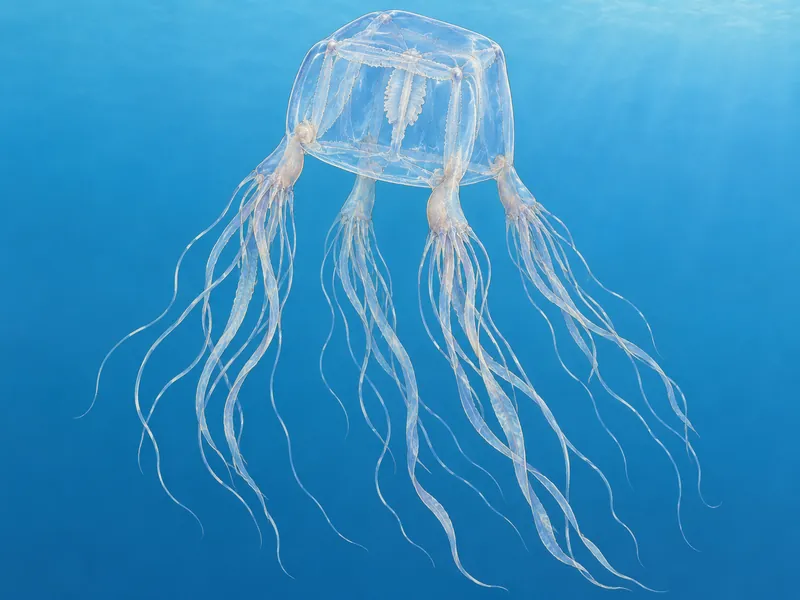 Thai box jellyfish (Chironex)
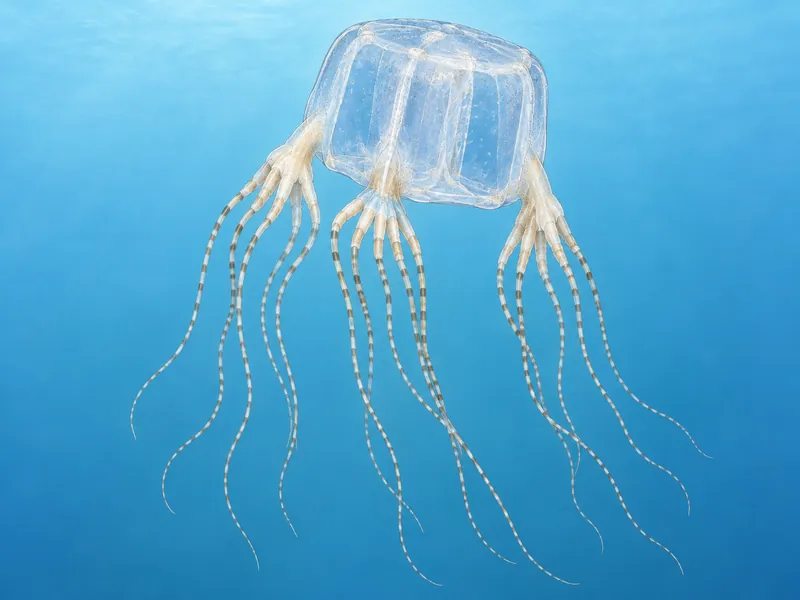 Chiropsoides box jellyfish
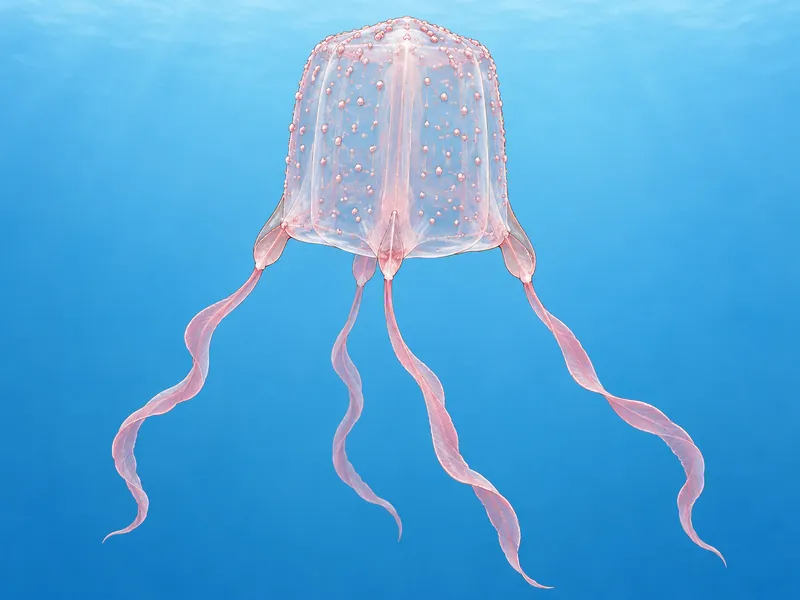 Morbakka (single-tentacle box jellyfish)
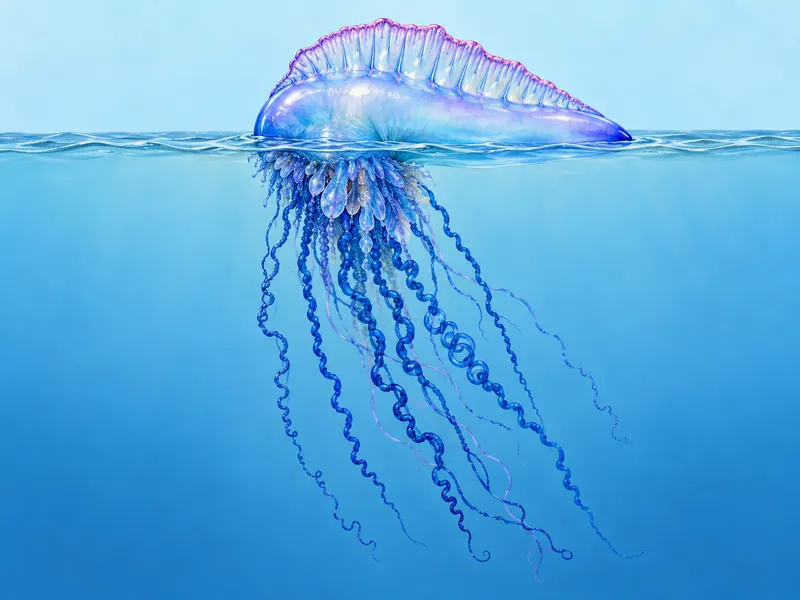 Portuguese man o’ war (bluebottle)
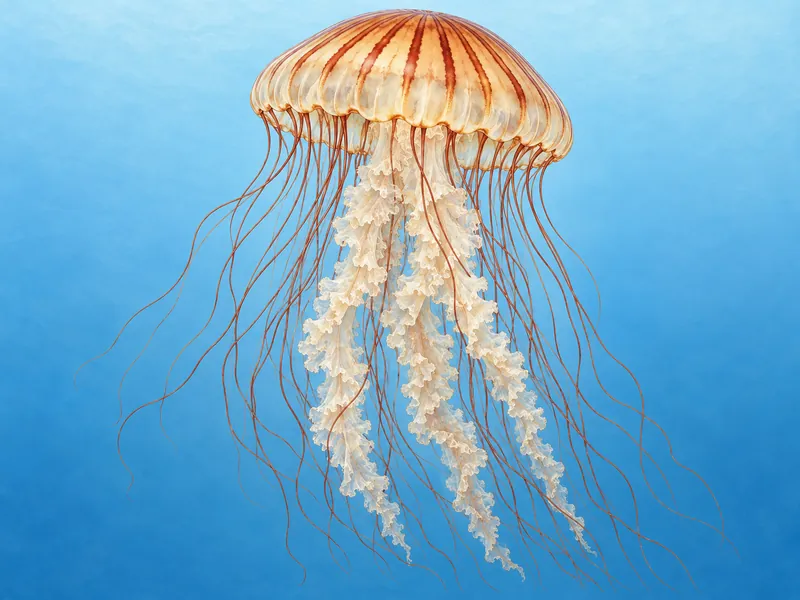 Sea nettle (fire jellyfish)
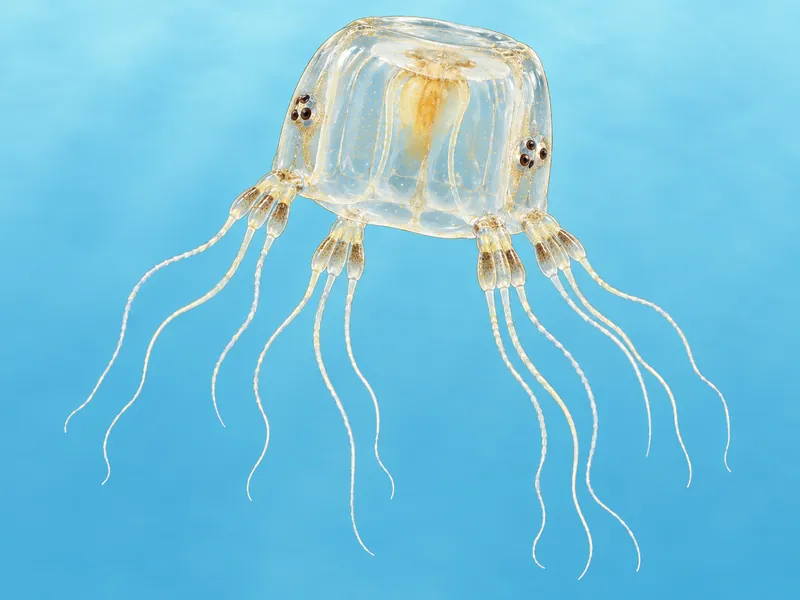 Mangrove box jellyfish (Tripedalia)
Questions and answers
Is the hairy jellyfish (lobonema) dangerous?
Moderate sting. Burning, redness and an itchy rash where it touched. The related edible Lobonemoides proved more toxic than Rhopilema in laboratory tests.
Where in Thailand does the hairy jellyfish (lobonema) occur?
Found in coastal waters on both coasts; commercial catches come mainly from the Gulf of Thailand.
What to do if stung?
Leave the water, rinse with seawater, remove any tissue without rubbing. For pain, use a cold pack or hot water around 45 °C.