



Beach flags in Thailand: what they mean and what about jellyfish
Flags on Thai beaches warn first of all about currents and waves, the main danger by the sea in the monsoon season. But it is worth asking lifeguards about jellyfish too.
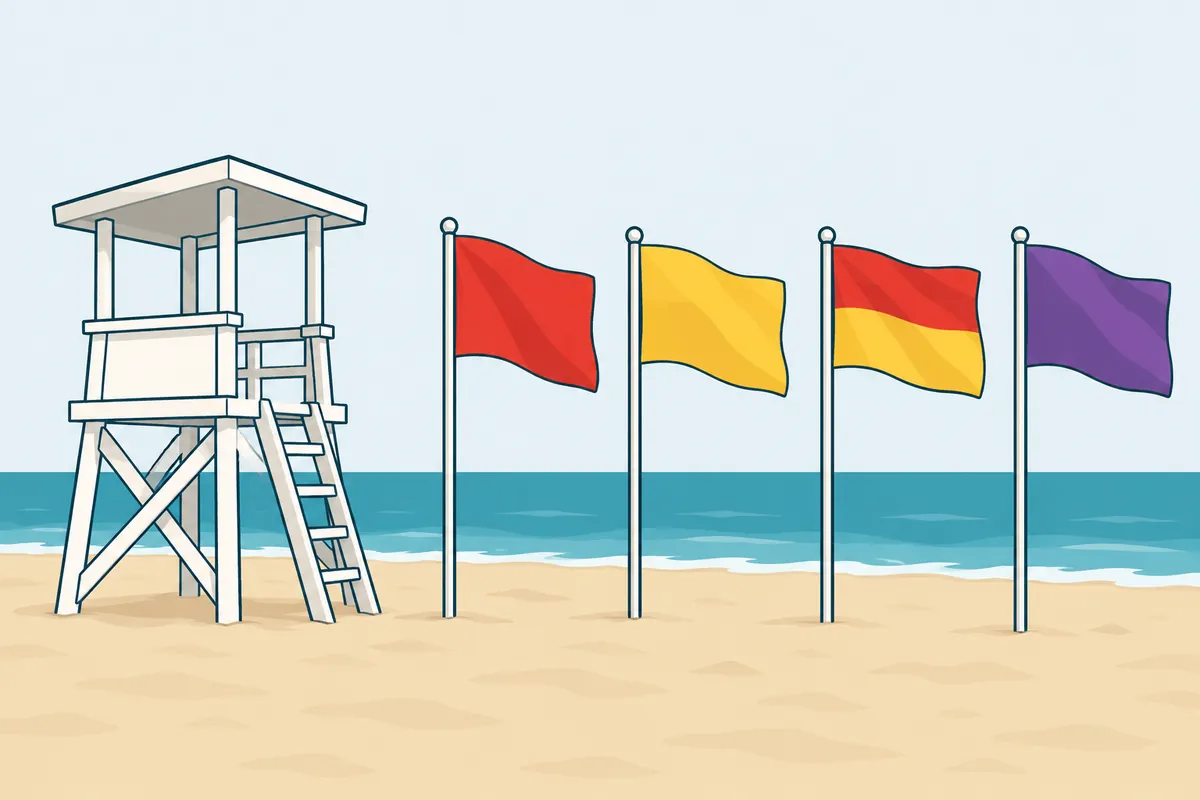
What the flags mean
- Red flag: swimming is prohibited. Lifeguards put it up where rip currents and strong waves are likely. It is a ban, not "take care", even if the sea looks calm from the shore: Phuket authorities have urged tourists not to ignore red flags after fatal drownings.
- Yellow flag: caution, moderate waves or currents, weak swimmers should stay out. That is how the international beach flag standard defines it.
- Red-and-yellow flags (red on top, yellow below) go up in pairs: they mark the edges of the area lifeguards watch. Swim between them.
- No flags and no lifeguards: you swim at your own risk; in the monsoon season (roughly June to October on the Andaman coast) better not go out of your depth.
- RedNo swimming: strong waves or rip currents.
- YellowCaution: moderate waves or currents, weak swimmers should stay out.
- Red and yellowRed on top, yellow below: lifeguards are on duty here.
- A pair of red-and-yellowThe edges of the lifeguard area: swim between the flags.
Flag systems can differ from beach to beach. If unsure, ask the lifeguards.
What about jellyfish?
There is no single "jellyfish flag" for every beach in Thailand. Jellyfish are flagged in other ways: signs, vinegar stations at lifeguard towers, notices on the beach and marine department warnings.
- Ask the lifeguards: "Any jellyfish today?" (in Thai: "Wan-nee mee maeng-ka-prun mai?").
- Walk along the waterline: jellyfish washed up on the sand and blue bluebottle floats are a clear sign.
- Check the jellyfish forecast for the beach and recent reports on this site.
- If you see a vinegar station, remember where it is.
Lifeguards and hours
Lifeguards work during daylight hours. In the evening, when they leave the towers, swimming is noticeably more dangerous: nobody will be there to help.
Do not swim when the red flag is up or outside the lifeguard area. If a current pulls you out, do not fight it: swim parallel to the shore and call for help.
What to do after a jellyfish sting is in first aid.